Handbags
An ongoing conversation
Since its origins, craft has been the driving force behind the world of fashion. The techniques and trades handed down from generation to generation are not only preserved, they transform, expand and engage with other artistic languages. 080 BEYONDCRAFTS stems from the idea of creating a space to reflect on these creative processes from a contemporary point of view.
The project takes the meeting as its starting point. Craftspeople who redefine craft as it now stands in Catalonia come together in a single space to exchange processes, insights and questions. The premise of the exhibition’s curators was to seek proposals that blur the lines and question the traditional boundaries of trades by bringing creators together from different generations and backgrounds, erasing borders between disciplines and inviting audiences to reconsider their relationship with these objects and the hands that created them.
In this second edition, 080 BEYONDCRAFTS: Handbags – An ongoing conversation, handbags are the centre of attention as a territory for exploring craftwork. Beyond their functional dimension, handbags are on display here as objects in which technique, materiality and thought meld together.
The pieces that make up the show reveal how contemporary craftspeople reinterpret these objects from different perspectives by investigating materials, questioning form and extending the boundaries of technique. The result is a collection of works that act as fragments of an open conversation – an ongoing conversation – about the present and future of craft, fashion and culture.
Brought together under the same roof, these pieces and their authors make it possible to uncover the creative fabric that drives contemporary craftwork in Catalonia and in the world today, and enable us to understand the cultural value that these objects stand for a little better.
ARTISANS
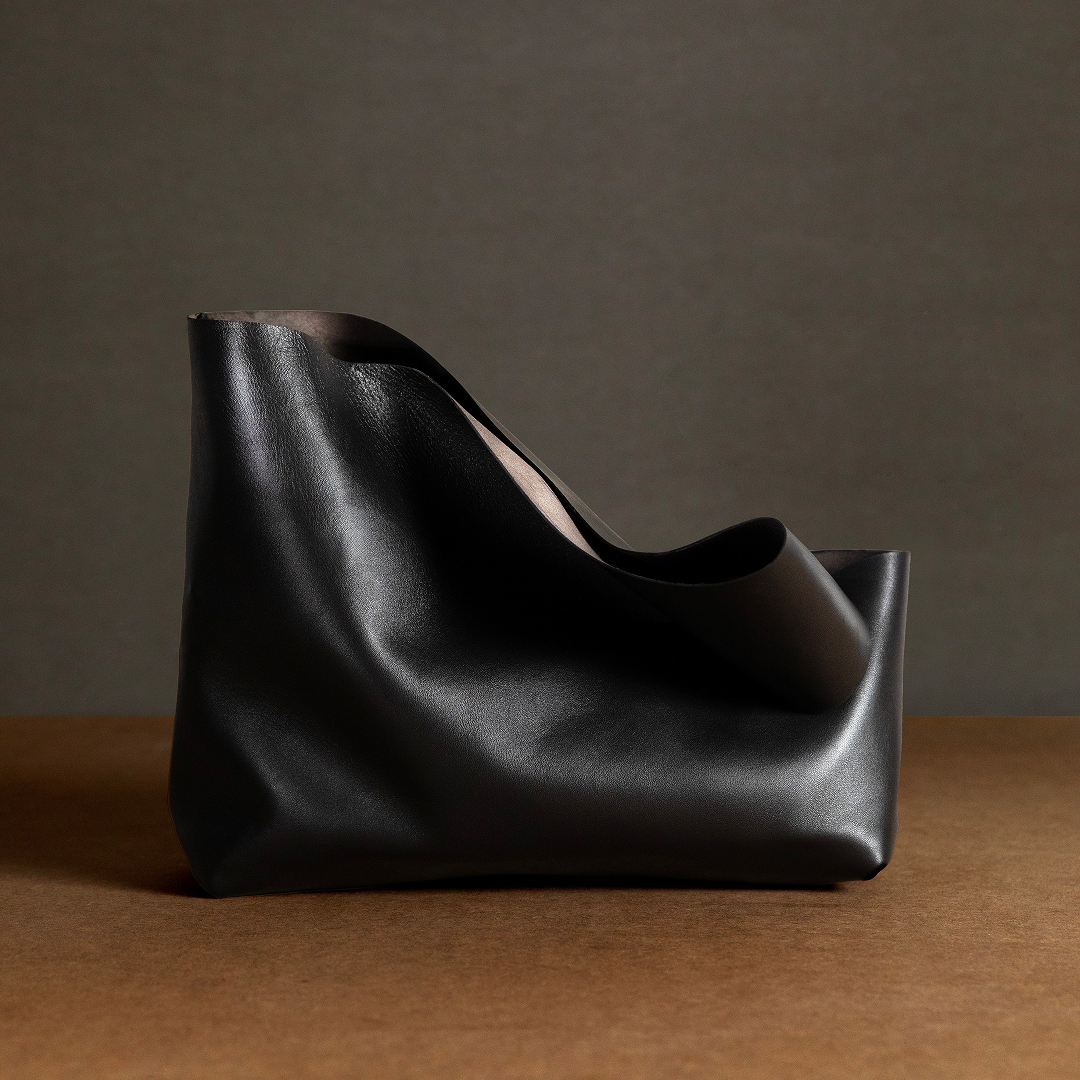
BERTA M. MONTBLANCH
Berta M. Montblanch es una diseñadora con base en Barcelona, recién graduada en BAU, Centro Universitario de Artes y Diseño.
Trabaja en distintas ramas de la artesanía, como el calzado, los accesorios y la indumentaria femenina. Reinterpreta sus creaciones desde su imaginario y las trabaja planteando el proceso como método.
• Nombre de la obra: Cut and Fold Bag
• Fecha: 25 de marzo de 2025
• Materiales: piel de vacuno
• Técnica o proceso: confección en piel a partir de la técnica one-piece-pattern
• Medidas: 45 x 28 x 9 cm
• Descripción de la pieza y proceso de creación:
La pieza nace del proyecto “Tou com el ciment” (“Blando como el cemento”), donde la moda se cuestiona a través de los métodos de las vanguardias del s. XX.
Esta pieza se inspira en la forma de trabajar de Antoni Tàpies, extrapolada a la moda con la técnica del one-piece-pattern, contemplando todas las piezas del patrón como una unidad. Añade una capa más cuando se logra la funcionalidad, explorando el corte como generador de forma. Sin necesidad de añadir elementos adicionales, la pieza se eleva a su mínimo exponente.
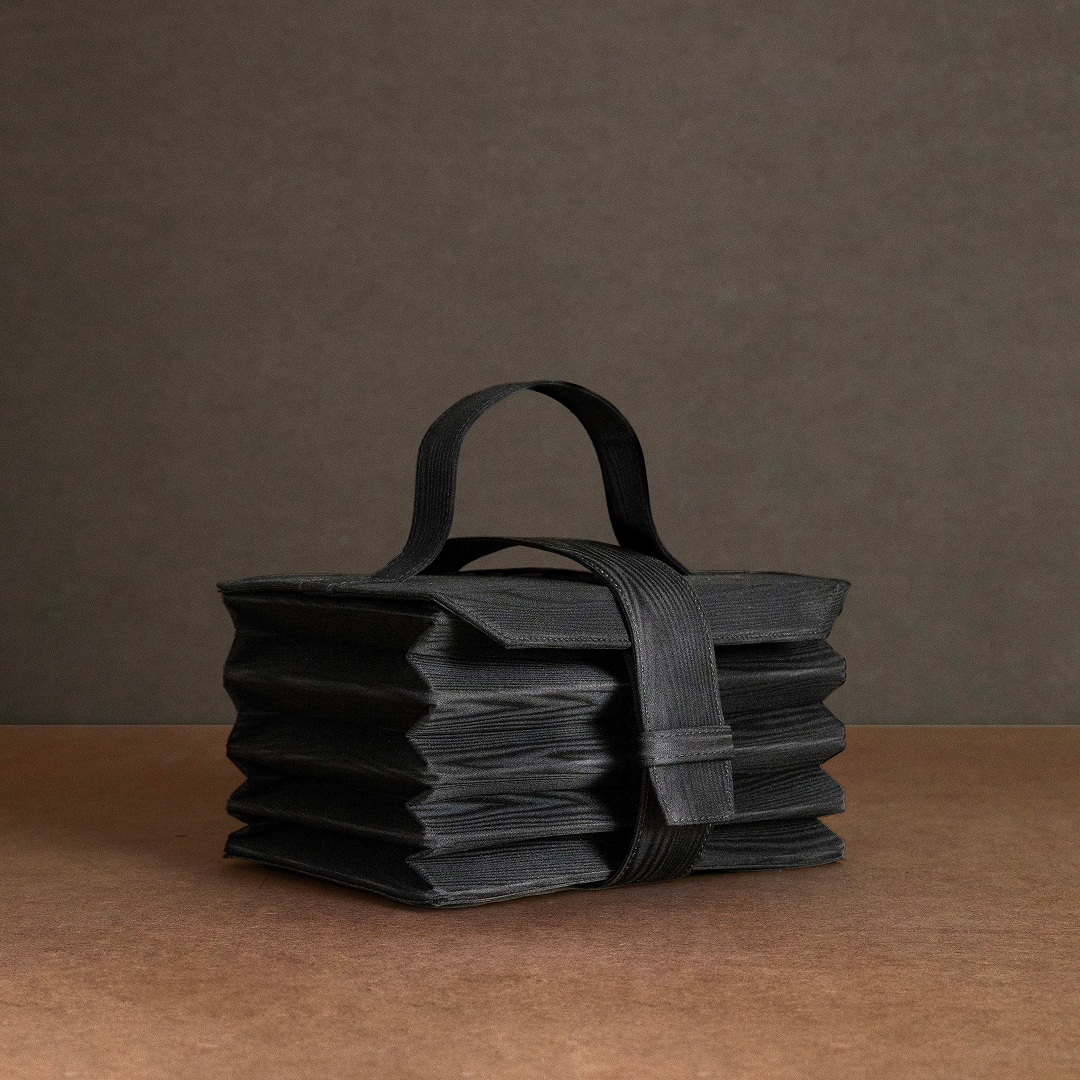
INÉS SISTIAGA
Inés Sistiaga is a textile designer based in Barcelona.
Her work combines investigation into materials, textile techniques and production processes that straddle craftwork and industrial output.
She has worked in the worlds of art, design and production, for which she has completed projects that explore structure, the meaning and functional potential of fabrics.
• Name of the work: LunchBox
• Date: December 2024
• Materials: Moiré fabric, synthetic framework and insulation
• Technique or process: handmade
• Size: 24 × 18 × 8 cm (collapsed), 24 × 18 × 14 cm (expanded)
• Description of the piece and the creative process:
LunchBox is an insulated fabric lunch box developed for the store Fondo Supper Club. It reinterprets an everyday object for carrying food, but has shifted it towards a language more closely related to fashion.
The piece was entirely developed at the studio using a manual prototyping process. The accordion-like structure enables it to be expanded and collapsed, whilst keeping its shape and serving for its intended use.
Beyond functionality, the design puts forward a new look for this type of object. The moiré fabric gives its outer surface a unique identity that shimmers in the light and as it moves, which places the piece between an accessory and a functional object.
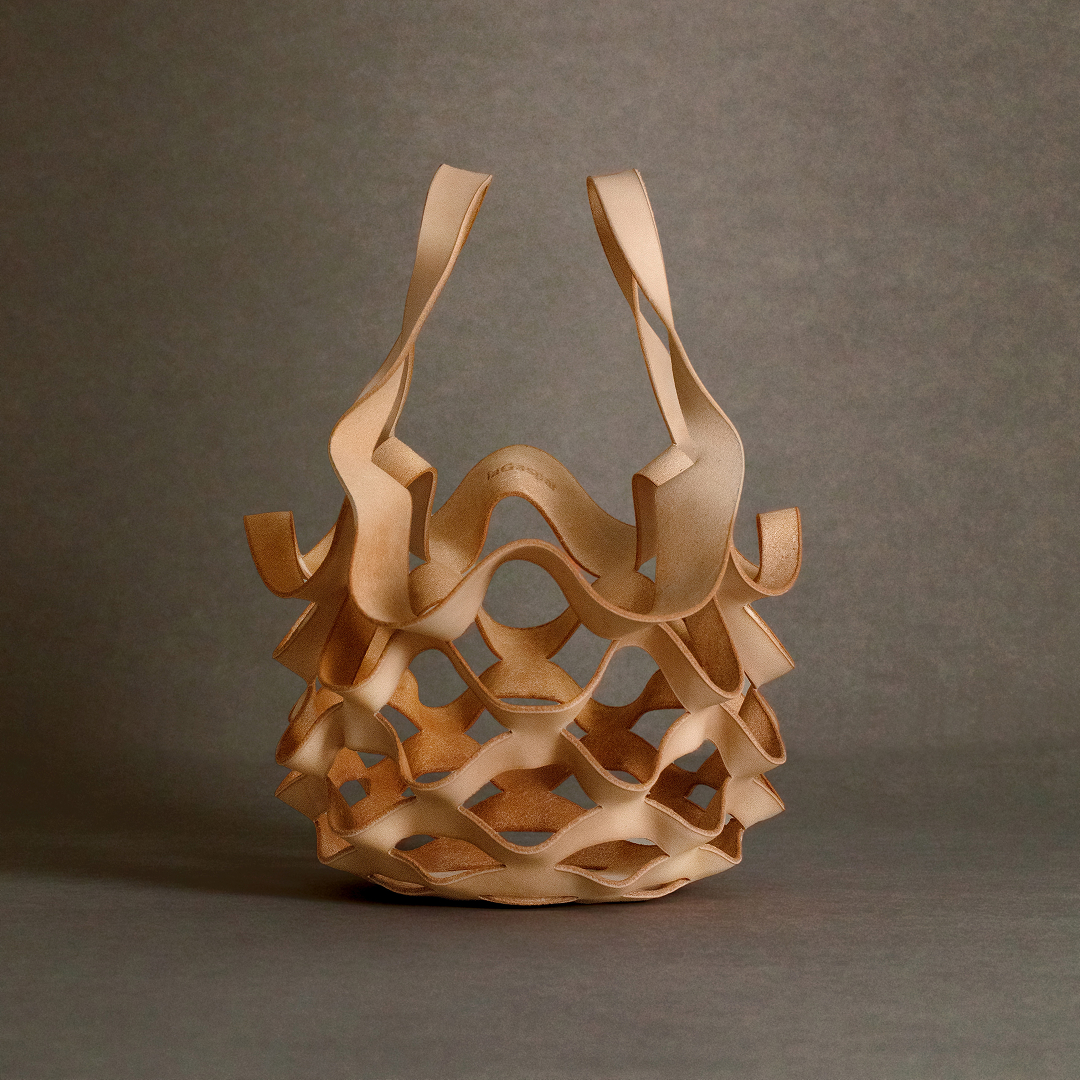
LaGaspar
LaGaspar Art And Design School teaches vocational training courses on leather crafting, the only one of its kind in Catalonia, with close ties to the luxury leather industrial and craft sectors.
These courses train students to work in arts and crafts workshops, businesses related to this sector and to carry out the different stages in leather design for fashion and crafts.
• Name of the work: Handbag-Basket
• Date: 2023
• Materials: kipskin leather
• Technique or process: boiled leather
• Size: 44 x 30 cm
• Description of the piece and the creative process:
This is a handbag made of a single round piece of moulded kipskin leather, which was subsequently boiled to give it the shape of a basket.
This medieval technique of boiling leather allowed the piece to harden and keep its three-dimensional shape.
MARIANA MÉNDEZ
Mariana Méndez is a designer whose work straddles design, art and fashion. For more than twenty years, she has been investigating craft techniques and innovative ways of building fabrics to make pieces that transform functional objects into a form of expression.
She started her career in Milan when she was 23. Her collections quickly triumphed in some of the world’s most influential concept stores. Since then, her work has been and still is present in international spaces such as 10 Corso Como, Joyce Hong Kong, Liberty London, Beams, Horst Wanshura and Grabner. Over her career, she has worked with establishments such as Y’s by Yohji Yamamoto and Mandarina Duck, and is currently engaged in an exclusive collection for the LVMH Group, which is available in the boutiques in the Belmond hotels under the label Mariana Méndez for Belmond.
• Name of the work: Papagallo
• Date: spring-summer 2026
• Materials: cord encased in silk
• Technique or process: woven on a triangular loom
• Size: 40 x 55 x 8 cm
• Description of the piece and the creative process:
Papagallo stands out as one of the purest expressions of Mariana Méndez’ universe: a piece of craftwork that is at the pinnacle of complexity and sophistication. Woven on iconic triangular looms, specifically designed for each piece, Papagallo strikes a fine balance between tensions: double faced, smooth, enveloping.
Papagallo moves with the body naturally to convey a subtle elegance that does not seek to impose, but that inevitably draws the eye in.
More than a bag, Papagallo is an understated declaration of style, an object that occupies time with the same power as it speaks with the present.
MONTSE ROA
Montse Roa is a product designer (ELISAVA, Barcelona School of Design and Engineering) and a film art director (ESCAC, Film and Audiovisual School of Catalonia).
In 2015 she left her city of birth (Barcelona) and moved to the countryside in the middle of the Ebro Delta’s paddy fields. This is the place where she discovered basket weaving, a place of creativity, calm, precision and connection with nature.
Montse is currently making small collections of woven baskets with the intention of finding solutions to the needs of the modern world through traditional weaving techniques using plant fibres, mainly wicker. She teaches a wide range of courses at community centres, contemporary craft schools, and art and design universities.
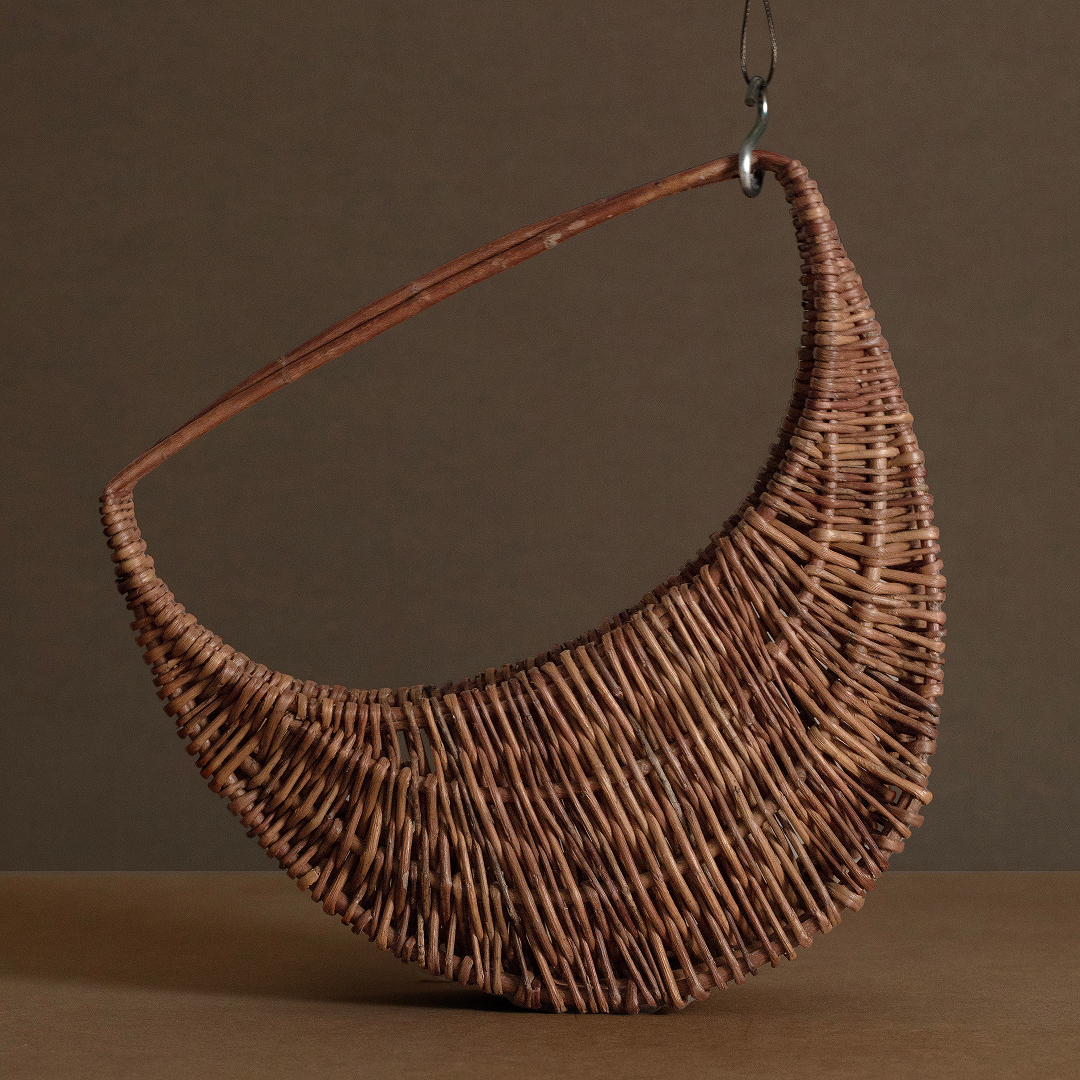
• Name of the work: Dora 02 handbag
• Date: 2023
• Materials: wicker (Salix purpurea)
• Technique or process: wickerwork. Firstly, the framework is built using moulds specifically made for this collection and then the structure is woven using more slender wicker.
• Size: 30 x 27 x 15 cm
• Description of the piece and the creative process:
This piece forms part of the Dora Collection. Dora is the name of the artist’s mother. This collection is a homage to her, inspired in her modesty and elegance.
They are pieces made of wicker (Salix purpurea) using traditional techniques that also respond to the needs of the modern world.
These bags are handmade, with a great deal of affection and dedication. Each piece is unique, so there may be slight variations in colour, pattern, size and shape.
NIA DE FER
Nia De Fer is a knitwear studio that interprets knitting techniques and innovates using a wide range of materials.
The output establishes a dialogue between concepts such as fragility and structure though pieces related to clothing. All of the pieces are designed and made in Barcelona.
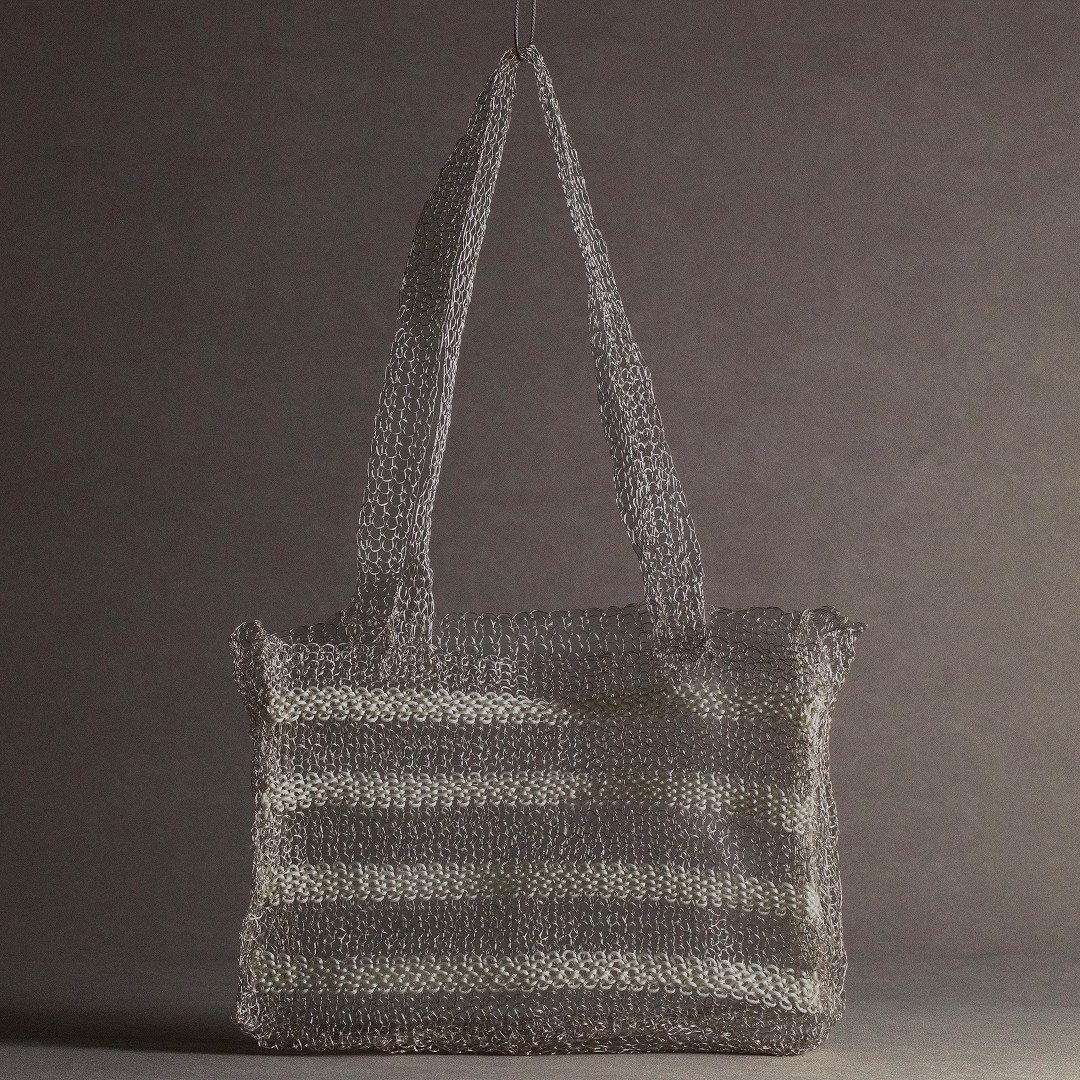
• Name of the work: Metallic Striped Baguette
• Date: January 2026
• Materials: steel yarn
• Technique or process: knitted using steel yarn, which forms the bag’s structure
• Size: 30 × 20 × 5 cm
• Description of the piece and the creative process:
Bag knitted using steel yarn, which results in a delicate but robust structure. The piece arose from a process of experimentation that resulted in six creations, all made using the same technique and material, but exploring different shapes and volumes.
REBECCA HANDKNIT
Rebecca Handknit are two knitters, María Fonseca and Mònica Carrascal, who come from very different career backgrounds: the world of the environment and the world of communications.
Their hobby of hand knitting brought them together and pushed them into setting up Rebecca Handknit, a brand that provides services to fashion experts, both designers and the wardrobe supervisors of different performing arts.
They currently also design their own pieces for end customers.
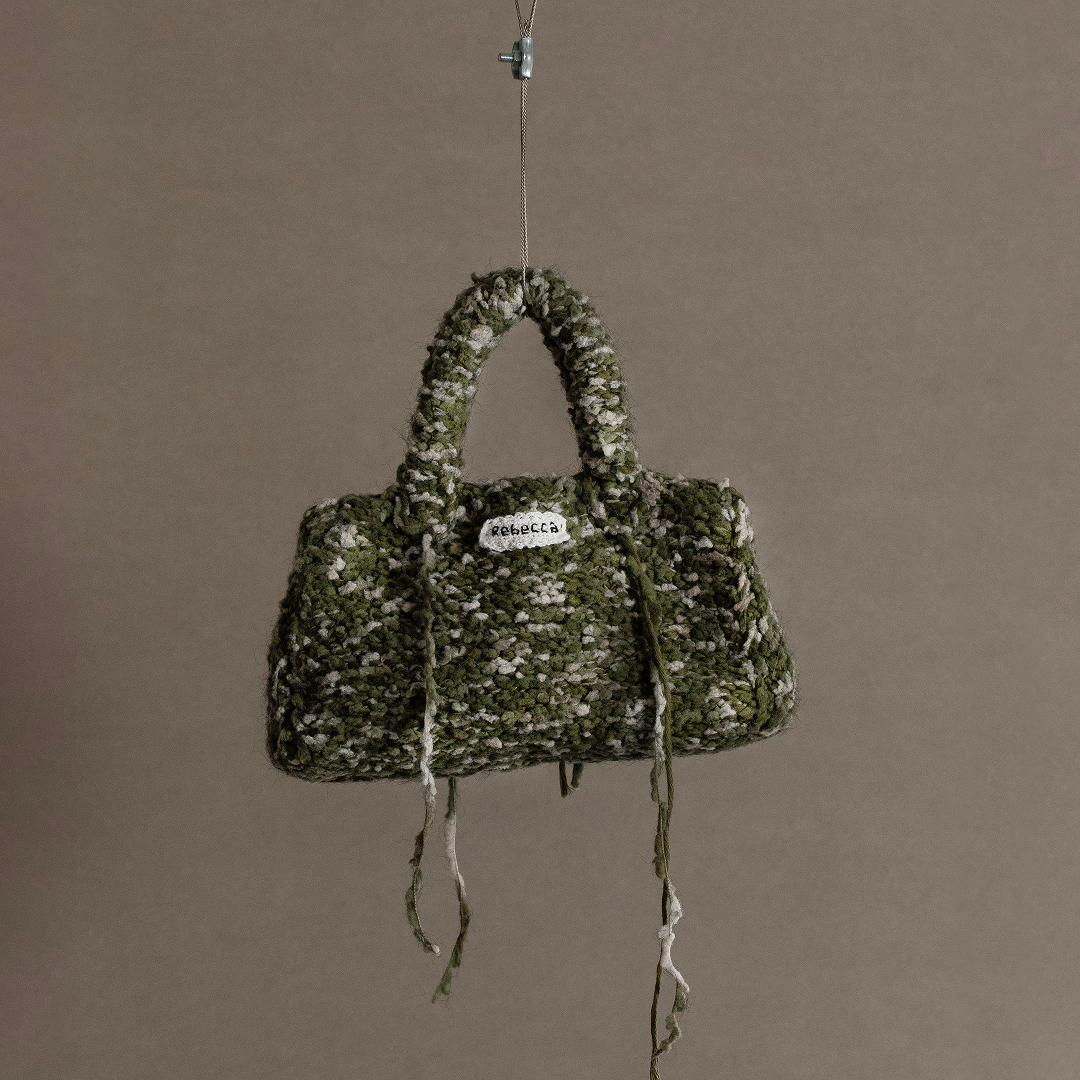
• Name of the work: Sotabosc (Undergrowth)
• Date: January 2026
• Materials: cotton thread, recycled acrylic, viscose and iron wire
• Technique or process: two-needle knitting, crochet and embroidery
• Size: 23 x 24 x 6 cm
• Description of the piece and the creative process:
This piece recreates the density and freshness of woodland undergrowth.
It is made using the two-needle knitting technique that combines two essentially different fibres – cotton and acrylic – to achieve irregular, organic textures. Using this mix of materials, it is possible to build up a three-dimensional volume that invites one to touch it and highlights the intrinsic value of the raw materials.
SOFÍA VALENCIA
Designer from Bogotá who trained in Barcelona. Her work brings together her academic training in fashion with self-taught crocheting techniques, whilst seeking to upgrade waste materials.
Inspired by the crafts of her native Colombia, she transforms tin rings into pieces of fabric to explore new forms of clothing.
She sets out to give a second life to everyday materials though her handiwork.
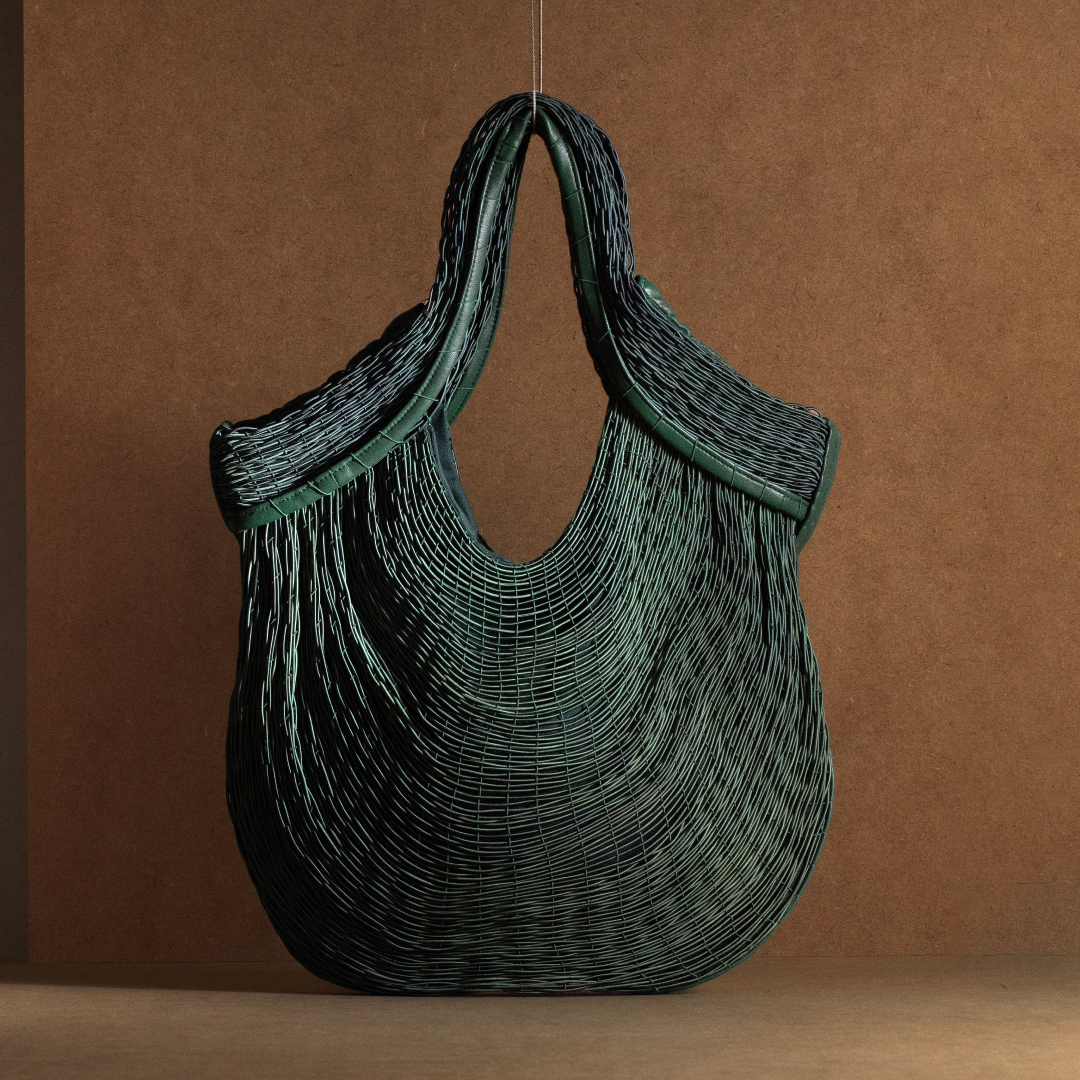
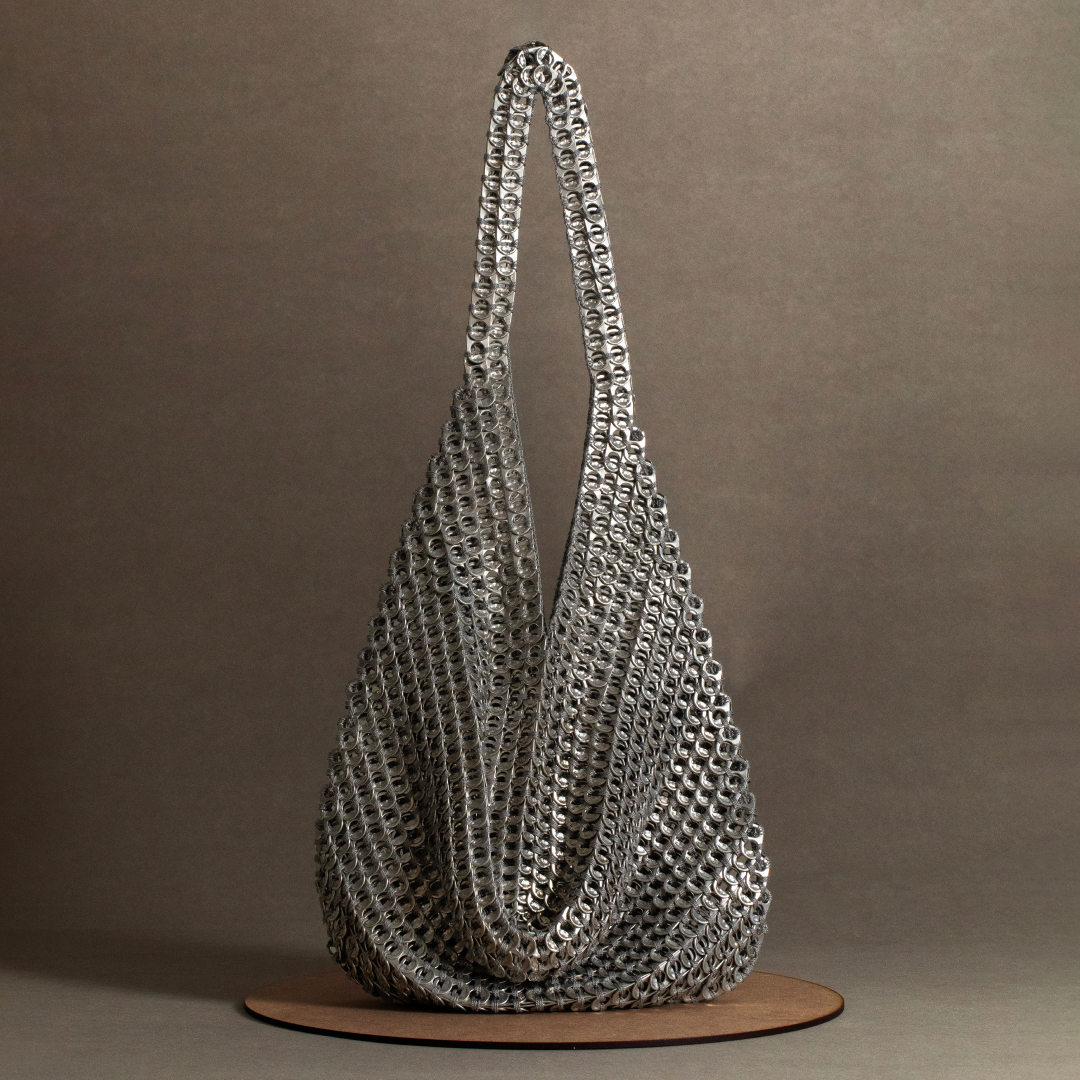
• Name of the work: Bacatá
• Date: March 2026
• Materials: tin rings and cotton thread
• Technique or process: crochet
• Size: 40 x 64 cm
• Description of the piece and the creative process:
Shoulder bag with a spacious silhouette and organic hang, made of recycled materials. The outcome is a flexible metal mesh that is built into the body and the handle, all in a single piece with no seams so that it adapts to the contours of the body.
Every tin ring is individually selected, cleaned and polished before being crocheted together. This piece does not follow a set pattern or design; it is created intuitively whilst being knitted and is fitted on a mannequin. The bag emerges as work is being done on it: its is crocheted whilst the shape is directly sculpted to explore the limitations of the materials and coming up with the final design.
Photos by Guillermo Solas
Artesania Catalunya and 080 Barcelona Fashion have come together again for the second time with the intention of showcasing craft and fashion in Catalonia.
080 BEYONDCRAFTS, under the guidance of Creative Director Guillermo Solas, has returned to the 080 event with a collection of handbags designed by eight craftspeople who blur the lines and transform boundaries of craft and technique as we understand them.
Under the subtitle An ongoing conversation, the curatorial concept of this second edition is to set up a meeting between these craftspeople in an ongoing conversation about the creative process behind each piece. Different conversations that give us a new perspective about the materiality and method of each work.
Brought together under the same roof, these pieces and their authors make it possible to uncover the creative fabric that drives contemporary craftwork in Catalonia and in the world today, and enable us to understand the cultural value that these objects stand for a little better.
Guillermo Solas, Creative Director
